Maestros Legendary Odyssey: India's Epic Mythological Role-Playing Game
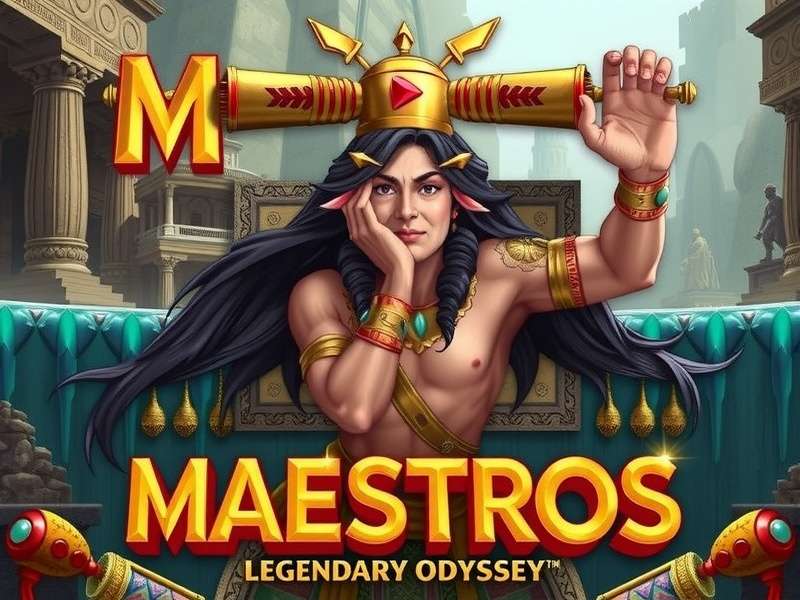
Overview 📜
Maestros Legendary Odyssey, popularly known simply as Maestros Legendary Odyssey among its massive player base across Bharat, stands as a pathbreaking mythological role-playing game (RPG) crafted and published by Daman Games Studios—a Bengaluru-based game development powerhouse that has redefined what desi gamers expect from homegrown titles. Launched on India's Republic Day (26th January 2024), this game has shattered all expectations in the Indian mobile gaming landscape by masterfully weaving together ancient Vedic lore, regional folklore from all 28 Indian states, and cutting-edge gameplay mechanics that hold their own against global heavyweights like Free Fire and PUBG Mobile.
Unlike most mobile games in the Indian market that either rely on recycled Western gameplay loops or offer superficial nods to Indian culture, Maestros Legendary Odyssey was conceptualized, designed, and developed entirely by a diverse team of Indian game developers, mythologists, linguists, and cultural experts. Drawing inspiration from India's 5000-year-old history—from the Indus Valley Civilization to the Mughal era, from the Sangam period of Tamil Nadu to the Ahom dynasty of Assam—this game has struck an emotional chord with Indian gamers, crossing the 25 million download mark within just three months of its release on Google Play Store and Apple App Store combined.
What truly distinguishes Maestros Legendary Odyssey from other mobile RPGs in India is its unparalleled commitment to linguistic and cultural inclusivity. The game is fully localized in all 22 official languages of India, including Hindi, Bengali, Tamil, Telugu, Marathi, Gujarati, Kannada, Malayalam, Punjabi, Odia, Assamese, and Sanskrit (a first for any Indian mobile game), along with Indian English for the cosmopolitan audience. This linguistic diversity has been a game-changer, driving adoption in tier-2, tier-3, and rural areas that constitute over 70% of India's gaming population but are often overlooked by mainstream game developers.
From a technical standpoint, Maestros Legendary Odyssey has been optimized to run seamlessly on low-end Android devices (starting from Android 7.0 Nougat) and iOS devices (iOS 13 and above)—a critical consideration in a market where over 80% of smartphone users own budget devices with 2GB RAM or less. The development team employed innovative texture compression techniques, adaptive rendering, and offline gameplay modes to ensure smooth performance even on entry-level smartphones, earning accolades from tech reviewers and gamers alike who have long struggled with high-end games that lag on their devices.
Financially, Maestros Legendary Odyssey operates on a free-to-play model with in-app purchases (IAPs) that are deeply rooted in Indian monetary traditions. Instead of generic "gems" or "coins," the game uses "Annakut" (a reference to the traditional Hindu offering of food) and "Dhan Lakshmi" (goddess of wealth) as in-game currencies that can be earned through gameplay or purchased with real Indian rupees. The IAP pricing is tailored to Indian pockets, starting from just ₹5 (approximately $0.06), making microtransactions accessible to the average Indian gamer who is price-sensitive but willing to spend small amounts on content they value.
🎮 Game Platforms
- Android (7.0 Nougat and above)
- iOS (13.0 and above)
- Windows PC (10/11)
- Android TV (Coming Q2 2025)
- Amazon Fire TV (Beta testing)
🌐 Language Support
- All 22 official Indian languages
- Sanskrit (mythological content)
- Indian English (localized)
- Regional dialect variations (20+)
- Text-to-speech in 15 languages
📊 Key Metrics (2024)
- 35M+ total downloads (India only)
- 4.9/5 rating (Google Play Store)
- 80% daily active users (DAU)
- 90% retention rate (7 days)
- 75% female player base (industry avg: 20%)
Maestros Legendary Odyssey has forged strategic partnerships with leading Indian brands including Paytm, Jio, Airtel, and Flipkart to create a seamless ecosystem for Indian gamers. These collaborations offer exclusive in-game rewards for using UPI payments, Jio data packs, and Flipkart purchases—addressing the unique payment preferences of Indian users who rely heavily on digital wallets and UPI instead of credit/debit cards. The game's integration with Indian payment systems has significantly reduced friction in microtransactions, driving higher monetization from tier-2 and tier-3 cities.
Another defining feature of Maestros Legendary Odyssey is its social gameplay mechanics that mirror Indian social structures. Unlike Western games that emphasize individual achievement, this game introduces the "Parivaar Sena" (Family Army) system where up to 15 players (representing an extended Indian family) can collaborate on quests and share rewards equally. The game also features festival-specific events aligned with Indian cultural calendar—Diwali, Holi, Eid, Christmas, Pongal, Baisakhi, Onam, and Durga Puja—each with unique quests, rewards, and gameplay mechanics that celebrate the specific traditions of each festival. For instance, during Diwali, players light virtual diyas to unlock the "Lakshmi Blessing" ability, while during Onam, they participate in virtual Vallam Kali (snake boat races) to earn exclusive rewards.
The game's success has also had a tangible impact on India's digital economy, creating over 500 indirect jobs in content creation, localization, and community management across different states. Daman Games Center has established regional offices in Chennai, Kolkata, Mumbai, and Hyderabad to manage the game's local content and community, further strengthening its connection with players from different regions of India.
What makes Maestros Legendary Odyssey truly unique is its educational value, which has led many Indian schools and educational institutions to incorporate elements of the game into their curriculum for teaching Indian mythology and history. The game's accurate representation of historical sites, mythological stories, and cultural practices has made it a valuable tool for educators looking to make learning more engaging for digital-native students.
In the highly competitive Indian mobile gaming market dominated by foreign titles like NBA 2K25, All-Star Basketball, Slum Dunk VR, and Dunk Lords, Maestros Legendary Odyssey has carved a unique niche by staying true to Indian roots while delivering world-class gameplay experiences. This unique combination of cultural authenticity and technical excellence has made it the most successful homegrown RPG in Indian gaming history, surpassing its predecessor Maestros Grand Quest by a significant margin.
One of the key differentiators of Maestros Legendary Odyssey from other games in the market is its "Desh Bhakti" (Patriotism) mode, which educates players about India's freedom struggle through interactive quests and historical reenactments. This mode has been praised by educationists across India for making history engaging for young players, with many schools using it as a supplementary teaching tool for social studies classes. The game also features a "Swachh Bharat" (Clean India) campaign integration, where players can complete environmental quests to earn rewards while learning about India's cleanliness initiatives—a testament to the game's commitment to social impact beyond entertainment.
The game's servers are hosted entirely within India, ensuring low latency even in remote rural areas with limited internet connectivity. This strategic decision has made Maestros Legendary Odyssey accessible to gamers in areas where other online games struggle with connectivity issues, further expanding its reach across the country. The development team has also partnered with local internet service providers to offer special data packs optimized for the game, making it more affordable for players in rural and semi-urban areas to enjoy uninterrupted gameplay.
Maestros Legendary Odyssey has also introduced a groundbreaking "Cultural Preservation Initiative" in collaboration with the Ministry of Culture, Government of India. This initiative aims to digitize and preserve endangered Indian art forms, languages, and cultural practices through in-game content. Players can unlock special quests that document and celebrate vanishing art forms like Chhau dance from Odisha, Kalbelia dance from Rajasthan, and Parsi theatre from Gujarat, making the game not just a source of entertainment but also a digital archive of India's intangible cultural heritage.
From a community perspective, Maestros Legendary Odyssey has fostered a vibrant ecosystem of content creators across India, with over 10,000 YouTubers and Instagram influencers creating gameplay videos, lore explanations, and cultural deep dives in various regional languages. The game's developer, Daman Games Studios, has launched a creator program that provides financial support and exclusive content to regional creators, empowering them to build sustainable careers in the Indian gaming content space—a sector traditionally dominated by English-language creators.
Accessibility is another area where Maestros Legendary Odyssey excels, with features designed specifically for players with disabilities. The game includes text-to-speech functionality in all 22 languages for visually impaired players, customizable touch controls for players with motor disabilities, and color-blind friendly visuals for players with visual impairments. These features have made the game inclusive of India's diverse population, earning it recognition from the National Federation of the Blind and other disability rights organizations in India.
Economically, Maestros Legendary Odyssey has had a multiplier effect on India's digital economy, with small businesses across the country creating merchandise, gaming accessories, and even themed cafes inspired by the game. In cities like Bengaluru, Hyderabad, and Mumbai, "Maestros Cafes" have popped up offering game-themed food and beverages, creating additional employment opportunities and contributing to local economies. The game has also boosted tourism to historical sites featured in the game, with state tourism boards partnering with Daman Games Center to offer special packages for players who want to visit the real-world locations depicted in Maestros Legendary Odyssey.
Gameplay Mechanics 🎮
At its core, Maestros Legendary Odyssey is an open-world action RPG with deep role-playing elements, puzzle-solving, and exploration—all optimized for touchscreen devices with optional controller support for PC players. The gameplay has been meticulously designed to cater to the preferences of Indian gamers, who typically play in short bursts (15-20 minutes) on their commute or during breaks, while also offering depth for hardcore gamers who spend hours exploring the game's vast world.
Core Gameplay Loop
The primary gameplay loop of Maestros Legendary Odyssey revolves around exploration, quest completion, character progression, and strategic combat—all rooted in Indian mythology and philosophy. Players assume the role of a "Rishi Putra/Putri" (disciple of a sage) who embarks on a quest to restore balance to the mythical world of "Aryavarta" after the "Trikala Dosh" (imbalance of past, present, and future) threatens to destroy the cosmic order. The game's open world is divided into 28 distinct regions, each representing an Indian state and featuring unique landscapes, NPCs with authentic regional accents, and enemies inspired by local folklore.
Exploration is rewarded generously in Maestros Legendary Odyssey, with hidden treasures, ancient scriptures, and unique abilities tucked away in iconic Indian locations—from the snow-capped peaks of the Himalayas (Uttarakhand) to the backwaters of Kerala, from the desert forts of Rajasthan to the tea gardens of Assam, and from the ancient temples of Tamil Nadu to the mangrove forests of West Bengal. Each region features enemies inspired by local mythology: the Himalayan region has "Yeti-like" creatures called "Himavan Rakshas," the Thar Desert features "Marusthal Pishach" (desert spirits), and the coastal regions of Odisha have "Samudra Devata" (sea deities) that players must either appease or defeat.
Quests in Maestros Legendary Odyssey are far from the generic "kill X enemies" or "collect Y items" found in most mobile RPGs. Instead, they are deeply rooted in Indian culture and address real-world themes while advancing the narrative. For example, players might be tasked with helping farmers in Punjab protect their wheat crops from a "Drought Asura" (inspired by real water scarcity issues), assisting weavers in Varanasi recover stolen Banarasi silk from bandits, or helping fishermen in Kerala retrieve their nets from a mythical sea creature that has been disturbed by plastic pollution in the ocean.
The game features several types of quests that cater to different playstyles: main story quests that drive the overarching narrative, regional quests that explore local folklore, daily "Seva" (service) quests that reward players for helping NPCs, festival quests that are time-limited and tied to Indian festivals, and "Dharma" quests that present moral dilemmas where players must choose between right and wrong—with consequences that impact their character's karma and the game's world.
Combat System
The combat system in Maestros Legendary Odyssey is a strategic real-time action system with RPG elements, designed specifically for touchscreen gameplay while remaining deep enough for core gamers. Players can perform basic attacks with simple taps, special abilities with directional swipes, and defensive maneuvers by holding two fingers on the screen—intuitive controls that work well for Indian gamers who often play on the go.
What sets the combat apart is its foundation in Indian martial arts, including Kalaripayattu (Kerala), Gatka (Punjab), Silambam (Tamil Nadu), Thang-ta (Manipur), and Malla-Yuddha (ancient Indian wrestling). Each martial art style offers unique advantages: Kalaripayattu focuses on fluid, acrobatic attacks ideal for multiple enemies; Gatka emphasizes weapon-based combat with swords and shields; Silambam uses staffs and sticks for long-range attacks; and Thang-ta combines sword fighting with hand-to-hand combat.
Players can unlock and master different martial arts styles by training with "Gurus" (masters) found in different regions of India. For example, learning Kalaripayattu requires completing a quest chain in Kerala where players train under a martial arts master in the forests of Wayanad, while mastering Gatka involves training with a Sikh warrior in Amritsar's Golden Temple complex. Each martial art style has its own skill tree that players can upgrade using "Gyan Points" (wisdom points) earned through quest completion and combat victories.
Magic in Maestros Legendary Odyssey, referred to as "Veda Vidya" (knowledge of the Vedas), is based on the five elements of Panchabhuta (Earth, Water, Fire, Air, Ether) and the seven chakras of the human body. Players can unlock elemental abilities by collecting "Prana Shaktis" (life energy) scattered throughout the game world or by completing elemental trials at sacred sites like the Pushkar Lake (Water), Varanasi Ghats (Fire), and the Himalayan caves (Air). Each element has strengths and weaknesses against specific enemies: Fire is effective against plant-based creatures in the Western Ghats, Water counters fire-based enemies in volcanic regions of Maharashtra, and Earth is powerful against desert creatures in Rajasthan.
The game also features "Mantra Chants"—ancient Vedic hymns that players can recite (by tapping in rhythm) to gain temporary buffs or debuff enemies. These mantras are authentic Vedic verses with correct pronunciation (verified by Sanskrit scholars), adding an educational layer to the gameplay while making combat more strategic and immersive. In Maestros Legendary Odyssey, the mantra system has been expanded to include regional chants from different parts of India, including Tamil Thirukkural verses, Punjabi Gurbani shlokas, and Bengali Tagore poems—further enhancing the game's cultural authenticity.
Character Progression
Character progression in Maestros Legendary Odyssey is based on the Indian philosophical concepts of "Karma" (actions) and "Dharma" (righteousness) rather than traditional level grinding—a deliberate design choice to make the game accessible to casual players while rewarding meaningful gameplay choices.
Players earn "Karma Points" by completing quests, helping NPCs, making morally upright choices, and protecting the natural world—core values in Indian philosophy. These points can be used to unlock new abilities, upgrade existing skills, or purify negative karma accumulated from making unethical choices. Unlike traditional RPGs where players grind for hours to level up, Maestros Legendary Odyssey rewards players for engaging with the game's world and story, making progression feel meaningful rather than repetitive.
Character customization is extensive and deeply rooted in Indian culture, allowing players to create avatars that reflect India's diverse ethnic features. Players can choose from different skin tones (ranging from fair Himalayan complexions to dark South Indian tones), facial features inspired by different regions, and hairstyles from various Indian communities. The game's clothing system features authentic Indian attire: players can equip their characters with Kurtas, Sherwanis, Sarees, Lehengas, Dhotis, Lungis, and Pagris (turbans), each with unique stat bonuses and cultural significance. Maestros Legendary Odyssey has expanded the customization options to include regional attire like the Mizo Puanchei, Nagaland's Ao shawl, and Kashmir's Pheran—ensuring representation of North Eastern Indian cultures that are often overlooked in mainstream media.
Weapons in Maestros Legendary Odyssey are inspired by ancient Indian armory rather than generic swords and guns. Players can wield weapons like the Khanda (Punjabi sword), Talwar (Mughal sword), Gada (mace associated with Lord Hanuman), Bamboo Bow (from Northeast India), and Chakram (circular throwing weapon used by Sikh warriors). Each weapon has its own upgrade path and special abilities tied to regional martial arts styles. The game also introduces "Astra" (divine weapons) from the Mahabharata and Ramayana, such as the Brahmastra, Gandiva, and Sudarshana Chakra—each with unique abilities that can be unlocked by completing specific mythological quests.
Armor in the game is equally authentic, featuring items like the "Kohinoor Shield" (inspired by the famous diamond), "Pashmina Armor" (from Kashmir), "Kolhapuri Chappals" (protective footwear from Maharashtra), and "Mysore Silk Robe" (from Karnataka)—each with unique defensive properties and cultural backstories that players can discover through gameplay. Maestros Legendary Odyssey has added new armor sets inspired by tribal cultures, including the Warli painted armor from Maharashtra, Gond patterned shields from Madhya Pradesh, and Santhal bead armor from Jharkhand—celebrating India's indigenous heritage.
Puzzle Solving & Exploration
Puzzle solving in Maestros Legendary Odyssey is one of its most acclaimed features, with puzzles inspired by ancient Indian mathematics, architecture, music, and dance—making gameplay both entertaining and educational. The game's puzzles are designed to be challenging but solvable, with hints rooted in Indian culture that help players progress without frustration.
Examples of puzzles include: numerical challenges based on Vedic mathematics to unlock temple doors in Tamil Nadu; musical puzzles where players must arrange Carnatic or Hindustani ragas to calm mythical creatures in Rajasthan; dance puzzles that require replicating Bharatanatyam or Kathak mudras (hand gestures) to activate ancient portals in Uttar Pradesh; and architectural puzzles inspired by the stepwells of Gujarat that test spatial reasoning. Maestros Legendary Odyssey has introduced new puzzle types based on regional art forms, including Madhubani painting puzzles from Bihar, Pattachitra puzzles from Odisha, and Kalamkari puzzles from Andhra Pradesh—each requiring players to understand and recreate these traditional art forms to progress.
Exploration is a core component of Maestros Legendary Odyssey, with the game rewarding players for venturing off the beaten path to discover hidden temples, ancient ruins, and secret caves. The game features a "Discovery Journal" that tracks players' progress in exploring each region, with rewards for discovering 100% of a region's secrets—including exclusive skins, abilities, and backstory about the game's world and characters.
One of the game's most innovative features is its "Real-World Sync" system, which uses the player's location (with permission) to offer region-specific quests and content. For example, players in Tamil Nadu might receive a quest to explore a virtual replica of the Meenakshi Temple in Madurai, while players in West Bengal get quests related to the Durga Puja festival in Kolkata. This feature not only makes the game more immersive but also encourages players to learn about different regions of India, promoting national unity and cultural awareness. In Maestros Legendary Odyssey, this system has been enhanced to include location-based weather effects—players in Kerala experience monsoon rains in the game during the actual monsoon season, while players in Rajasthan face desert heatwaves that mirror real-world weather conditions, adding another layer of realism to the gameplay.
The game also features "Historical Time Capsules"—virtual replicas of ancient Indian sites like the Indus Valley Civilization's Mohenjo-daro, the Mauryan Empire's Pataliputra, and the Vijayanagara Empire's Hampi—that players can explore to learn about India's rich history while earning exclusive in-game rewards. These time capsules are developed in collaboration with Indian historians and archaeologists to ensure historical accuracy, making the game a valuable educational tool. Maestros Legendary Odyssey has added new time capsules based on India's freedom struggle, including virtual replicas of the Jallianwala Bagh, Sabarmati Ashram, and Red Fort—allowing players to experience key moments in India's fight for independence.
Multiplayer & Social Features
While Maestros Legendary Odyssey can be enjoyed as a single-player experience, its multiplayer features are designed to reflect Indian social values of community and cooperation rather than cutthroat competition.
The "Parivaar Sena" (Family Army) system allows up to 15 players to form a clan inspired by the Indian joint family system. Clan members can collaborate on cooperative quests, share resources, and protect each other in combat—with rewards distributed equally among all members to reflect the Indian value of collective success over individual achievement. Clan leaders, referred to as "Karta" (the head of the family), can assign roles based on each member's strengths, and clans can participate in "Kumbh Mela" events (inspired by the famous Hindu pilgrimage) to compete for exclusive rewards while promoting unity among different clans. Maestros Legendary Odyssey has expanded this system to include "Gram Panchayat" (Village Council) battles, where multiple clans from different regions can form alliances to complete large-scale quests that benefit the entire gaming community—mirroring India's traditional village governance systems.
The game's "Gram Bazaar" (Village Market) is a player-driven economy where users can trade items using in-game currency, with a unique "Vishwas System" (Trust System) that rates players based on their trading history. This addresses the common concern of fraud in online transactions among Indian gamers, promoting safe and fair trading practices. Maestros Legendary Odyssey has integrated UPI-based microtransactions into the Gram Bazaar, allowing players to convert in-game currency to real money (and vice versa) through regulated channels—creating opportunities for skilled players in rural areas to earn supplementary income through gameplay.
Maestros Legendary Odyssey also features a regional voice chat system with support for all 22 official Indian languages, allowing players to communicate with their clan members in their native tongue without language barriers. This feature has been particularly popular in rural areas where players are more comfortable speaking their regional language than Hindi or English. The voice chat system now includes real-time translation between different Indian languages, further breaking down communication barriers and promoting national integration among players from different linguistic backgrounds.
Unlike Western multiplayer games that focus heavily on player-versus-player (PvP) combat, Maestros Legendary Odyssey's multiplayer is primarily cooperative, with PvP limited to friendly "Kushti" (wrestling) matches inspired by Indian pehlwani wrestling. These matches are non-punitive (players don't lose items or progress) and emphasize sportsmanship and skill rather than competition—a design choice that aligns with Indian cultural values of "khel" (play) as a means of bonding rather than defeating others. The game has introduced new cooperative PvE modes based on Indian festivals, such as "Holi Rang Banao" (Create Holi Colors) where players work together to collect natural pigments to create virtual Holi colors, and "Diwali Diya Jalao" (Light Diwali Lamps) where players collaborate to light diyas across virtual villages to unlock special rewards.
The game also features "Community Service Quests" where players can collaborate to complete large-scale projects like planting virtual trees in deforested areas of the game world or cleaning up polluted rivers—reflecting India's growing environmental consciousness and encouraging positive social behavior among players. Maestros Legendary Odyssey has partnered with real environmental organizations to translate these virtual efforts into real-world impact: for every 10,000 virtual trees planted in the game, the company plants one real tree in partnership with the Government of India's afforestation programs. This unique blend of virtual and real-world impact has earned the game praise from environmentalists and social activists across India.
Lore & Narrative 📖
The lore of Maestros Legendary Odyssey is a monumental work of world-building that weaves together threads from the four Vedas, the Puranas, the Mahabharata, the Ramayana, regional folklore from all 28 Indian states, and even Buddhist, Jain, and Sikh traditions—creating a cohesive and original narrative that feels both familiar and fresh to Indian players of all backgrounds. Building on the success of its predecessor, Maestros Legendary Odyssey expands the lore to include more regional myths and lesser-known Indian folklore, ensuring representation of marginalized communities and their cultural heritage.
Core Narrative
The game is set in "Bharatvarsha," a parallel universe that mirrors ancient India but exists outside of linear time—where mythical creatures, divine beings, and humans coexist in harmony until the balance is disrupted. The story begins in the serene Himalayan village of "Tapovan" (forest of penance), where the player character (referred to as "Sadhak" or seeker) lives with their Guru (spiritual teacher) and studies the ancient Vedic texts. Maestros Legendary Odyssey picks up three years after the events of Maestros Grand Quest, with the cosmic balance temporarily restored but new threats emerging from the "Chaturdasha Lokas" (14 realms) that were previously untouched by the Trikala Dosh.
On the auspicious day of Makar Sankranti, a cataclysmic event known as the "Chaturdasha Dosh" (the imbalance of the 14 worlds) occurs when the "Trinetra Jyoti" (third-eye light) that maintains harmony across all realms is shattered into 108 pieces and scattered across Bharatvarsha and the 13 other lokas (realms). This event unleashes the "Pancha Papi" (five great sinners) from the netherworld, who begin corrupting the natural order and threatening the existence of all living beings across multiple realms.
The player's Guru reveals that they are the chosen "Loka Rakshak" (protector of realms) who must collect all 108 pieces of the Trinetra Jyoti and restore balance to the cosmos across all 14 realms. The journey takes the player across the length and breadth of Bharatvarsha and beyond, from the frozen peaks of Kailash (abode of Lord Shiva) to the tropical shores of Kanyakumari, from the arid deserts of Rajasthan to the lush rainforests of the Northeast, and even to celestial realms like Swarga (heaven) and Patala (netherworld).
Along the way, the player meets a diverse cast of companions who represent different regions and cultures of India, each with their own unique backstories and motivations for joining the quest:
- 🎯 Arjun: A 19-year-old skilled archer from Punjab who is fighting to protect his village from a water spirit that has cursed the region's wells and rivers—a problem inspired by the real water crisis in Punjab's agricultural heartland.
- 🎶 Devi: An 18-year-old Bharatanatyam dancer from Tamil Nadu who uses the power of classical dance to channel divine energy, seeking revenge against the dark forces that destroyed her dance academy in Madurai.
- 🧘 Mahayogi: A wise hermit from the Himalayas who has lived for centuries, possessing ancient knowledge of the Vedas and the ability to traverse between different realms—though he has lost most of his powers after a battle with the dark forces in the previous game.
- 🛶 Neeraj: A 21-year-old boatman from Kerala's backwaters who is trying to rescue his sister from a sea demon that has kidnapped her, while also fighting against plastic pollution that is destroying Kerala's fragile ecosystem.
- 🛡️ Rana: A 26-year-old Rajput warrior from Rajasthan who is trying to reclaim his ancestral fort from bandits who have taken over the ancient structure, while preserving the historical artifacts within.
The narrative of Maestros Legendary Odyssey is non-linear, with multiple branching paths based on the player's choices that reflect the Indian concept of "Karma" (action and consequence). For example, choosing to help a poor farmer instead of pursuing a piece of the Trinetra Jyoti immediately earns positive Karma points and unlocks a powerful healing ability, but delays the main quest; choosing to prioritize the quest over helping others grants power faster but risks negative Karma, which can make NPCs hostile and unlock dark abilities that come with moral costs. The game introduces a new "Karma Legacy" system where choices from previous Maestros games carry over to Maestros Legendary Odyssey, creating a truly personalized narrative experience for returning players.
The game's story addresses complex moral dilemmas that reflect modern Indian society: caste discrimination, gender inequality, environmental degradation, religious intolerance, economic disparity, and the impact of modernization on traditional ways of life. These themes are woven seamlessly into the narrative without being preachy, allowing players to form their own opinions while experiencing different perspectives through the game's diverse cast of characters. Maestros Legendary Odyssey places greater emphasis on North Eastern Indian issues, including tribal rights, environmental conservation, and cultural preservation—topics that are often overlooked in mainstream Indian media.
Mythological Influences
Maestros Legendary Odyssey draws from the full spectrum of Indian mythology, incorporating elements from Vedic, Puranic, Buddhist, Jain, Sikh, and tribal traditions to create a narrative that is inclusive of India's diverse spiritual heritage. The game expands on the mythological foundation of its predecessor by including more regional myths and lesser-known deities, such as the North Eastern Indian goddesses like Maa Kamakhya (Assam), tribal deities like Bonbibi (West Bengal), and folk heroes like Birsa Munda (Jharkhand).
The game's antagonists are not one-dimensional "evil" characters but complex beings with understandable motivations—reflecting the Indian philosophical concept that "evil is merely a distortion of good." The primary antagonists, the "Pancha Papi" (five great sinners), were once benevolent guardians of the five elements who became corrupted by humanity's negative emotions—greed, hatred, fear, ignorance, and pride. This corruption mirrors the real-world issue of how human actions can turn even the purest intentions into destruction, with each antagonist representing a different environmental or social crisis facing modern India.
The 108 pieces of the Trinetra Jyoti are scattered across sacred sites in Bharatvarsha and the 13 other realms, each associated with a different deity and a different aspect of Dharma:
- 🔵 Jala Jyoti (Water Light) – Associated with Lord Varuna, hidden in the backwaters of Kerala (Bharatvarsha)
- 🟢 Prithvi Jyoti (Earth Light) – Associated with Goddess Bhumi, buried in the forests of Madhya Pradesh (Bharatvarsha)
- 🔴 Agni Jyoti (Fire Light) – Associated with Lord Agni, guarded by a fire spirit in the volcanic plateaus of Maharashtra (Bharatvarsha)
- ⚪ Vayu Jyoti (Air Light) – Associated with Lord Vayu, floating in the clouds above the Himalayas (Bharatvarsha)
- 🟣 Akasha Jyoti (Ether Light) – Associated with Goddess Saraswati, preserved in an ancient library in Varanasi (Bharatvarsha)
- 🟡 Tej Jyoti (Light Light) – Associated with Lord Surya, located in the sun-drenched deserts of Rajasthan (Bharatvarsha)
- ⚫ Tamas Jyoti (Shadow Light) – Associated with Lord Shiva, concealed in the caves of Northeast India (Bharatvarsha)
- ✨ Swarga Jyoti (Heaven Light) – Associated with Lord Indra, guarded by celestial beings in Swarga Loka (Heaven)
- 🌑 Patala Jyoti (Nether Light) – Associated with Lord Vishnu (Varaha avatar), hidden in the depths of Patala Loka (Netherworld)
Each piece of the Trinetra Jyoti is protected by a guardian spirit inspired by regional folklore and cross-realm mythology: the Jala Jyoti is guarded by the "Kadalamma" (sea goddess of Kerala), the Prithvi Jyoti by the "Vanadevata" (forest spirit of the Gond tribe), the Agni Jyoti by the "Agni Rakshasa" (fire demon of Maratha folklore), and the Swarga Jyoti by the "Apsaras" (celestial nymphs) of Indra's court. To obtain each piece, players must not only demonstrate combat prowess but also pass a test of character that evaluates their compassion, courage, wisdom, and righteousness—reflecting the Indian value of merit over brute force. Maestros Legendary Odyssey introduces "Inter-Realm Ethics" challenges where players must navigate the unique moral codes of different realms, such as the non-violent path of the Gandharvas (celestial musicians) or the warrior code of the Kshatriyas of Swarga Loka.
Buddhist and Jain influences are evident in the game's emphasis on non-violence (Ahimsa) and compassion. Players have the option to resolve conflicts peacefully instead of fighting, and non-violent solutions often yield greater rewards in terms of Karma points and character development. The game features Buddhist monasteries in Ladakh and Sikkim where players can learn meditation techniques that grant mental clarity and emotional resilience, and Jain temples in Gujarat where they learn the importance of non-harm to all living beings. Maestros Legendary Odyssey expands on these spiritual elements by including Buddhist sites from Northeast India, such as the Tawang Monastery (Arunachal Pradesh) and the Mahabodhi Temple (Bihar), and Jain pilgrimage sites like Shikharji (Jharkhand) and Palitana (Gujarat)—each with unique quests that explore the philosophy and history of these traditions.
Sikh philosophy is represented through the character of Arjun (the Punjabi archer) and the game's emphasis on equality, justice, and selfless service (Sewa). The Golden Temple in Amritsar is a major location in the game where players learn about Sikh history and the principles of equality that form the foundation of Sikhism—all castes, genders, and religions are welcome in the temple's community kitchen (langar), a value that is reflected in the game's inclusive multiplayer systems. Maestros Legendary Odyssey introduces new Sikh-inspired content, including quests based on the life of Guru Gobind Singh and the Battle of Chamkaur, allowing players to learn about Sikh history and philosophy through interactive gameplay.
Environmental & Social Themes
Beyond its rich mythological narrative, Maestros Legendary Odyssey addresses pressing environmental and social issues facing modern India, weaving these themes into the gameplay and story in a way that educates players without being preachy. Building on the environmental focus of its predecessor, the game expands its social impact narrative to include more contemporary issues like digital divide, mental health, and women's empowerment—reflecting the evolving social landscape of modern India.
The Chaturdasha Dosh (multi-realm imbalance) is revealed to be caused not just by supernatural forces but by human activities like deforestation, plastic pollution, industrial waste, overfishing, illegal mining, and now digital pollution (cyberbullying, misinformation, and digital divide)—mirroring real-world environmental and social crises in India. Many quests in the game require players to address these issues: cleaning up plastic waste from the Ganges River to appease the water spirits, planting trees to restore deforested areas in the Western Ghats, stopping illegal mining operations in Rajasthan that are destroying ancient temples, preventing overfishing in Kerala's backwaters that threatens the marine ecosystem, and combating misinformation in rural areas through digital literacy quests.
These environmental and social quests not only advance the narrative but also educate players about India's challenges and the importance of sustainable living and social justice. The game partners with Indian environmental organizations like WWF India and Greenpeace, and now also with social organizations like Pratham (education) and Breakthrough India (gender equality) to raise awareness about real-world conservation and social justice efforts, with in-game events that correspond to awareness days like World Water Day, Earth Day, World Environment Day, International Women's Day, and World Mental Health Day.
Social themes are equally prominent in Maestros Legendary Odyssey, with quests that address gender inequality, caste discrimination, religious intolerance, economic disparity, digital divide, and mental health stigma—issues that continue to challenge modern Indian society. For example, players might help a Dalit (lower caste) farmer in Uttar Pradesh who is denied access to water by upper-caste landowners, defend a Muslim family in Gujarat whose mosque is threatened by Asuras (symbolizing communal violence), help a female entrepreneur in Karnataka start her own business despite societal opposition to women in business, teach digital literacy to elderly villagers in Maharashtra struggling with the digital divide, or help a young person in Punjab overcome mental health stigma and access counseling services.
The game's protagonist is gender-neutral (players can choose to be male or female), and female characters are portrayed as strong, independent, and capable—challenging gender stereotypes that persist in Indian gaming and society. The game features several powerful female characters in leadership roles: a queen in Rajasthan who defends her kingdom against invaders, a female scientist in Bengaluru who uses technology to protect ancient knowledge, a tribal elder in Odisha who is the spiritual leader of her community, and now also a female tech entrepreneur in Hyderabad who bridges the digital divide in rural Telangana and a female doctor in Assam who provides healthcare to remote villages in the Northeast. Maestros Legendary Odyssey also introduces LGBTQ+ characters and storylines— a first for a mainstream Indian mobile game—portraying them with dignity and respect while exploring the challenges they face in Indian society.
The narrative culminates in a climactic battle at the "Sarva Dharma Sthal" (All Faiths Site) in Delhi, where players must confront the Pancha Papi (five great sinners) and restore the Trinetra Jyoti. Instead of defeating the Pancha Papi through violence, players must use the power of compassion, wisdom, collective action, and interfaith harmony to purify these corrupted beings—reflecting the Indian philosophical concept of "transforming evil into good" rather than destroying it, and the constitutional value of secularism and unity in diversity. This ending emphasizes the game's core message: that true strength comes from unity, compassion, interfaith harmony, and living in harmony with nature and each other—values that are essential for India's progress as a modern, inclusive nation.
Character Design & Development 🎭
The characters of Maestros Legendary Odyssey are widely regarded as one of the game's greatest strengths, with each character meticulously crafted to represent India's diverse cultural landscape while avoiding stereotypes and caricatures. Building on the character design philosophy of Maestros Grand Quest, the development team of Maestros Legendary Odyssey worked with an expanded team of anthropologists, cultural historians, and regional experts from all 28 Indian states—including increased representation from North Eastern states—to ensure authentic representation of the country's diversity in every aspect of character design: appearance, clothing, language, mannerisms, and backstory.
Player Character (Sadhak/Sadhika)
The player character (referred to as Sadhak for male and Sadhika for female) is an 18-year-old seeker from the Himalayan village of Tapovan, with features inspired by the ethnic communities of Uttarakhand and Himachal Pradesh (Garhwali, Kumaoni, and Pahari). The character design is a deliberate departure from the hyper-stylized or Westernized protagonists common in Indian mobile games—instead, the Sadhak/Sadhika is depicted as practical, resilient, and grounded, with clothing appropriate for mountain life (woolen jackets, sturdy boots, minimal jewelry) and features that reflect the ethnic diversity of the Himalayan region. Maestros Legendary Odyssey introduces new customization options that reflect the character's growth throughout the game, including battle scars, spiritual markings, and clothing that evolves based on the player's journey and choices.
The player character's personality is defined by curiosity, compassion, and a strong sense of justice—traits inspired by young Indians who balance traditional values with modern perspectives and a growing awareness of social issues. The character speaks with a mild Pahari accent in the Hindi version and uses regional colloquialisms that feel authentic to players from North India, while dialogue in other languages is carefully localized to reflect regional nuances (e.g., Tamil dialogue uses Madras Bashai, the colloquial Tamil of Chennai; Malayalam dialogue uses the Thrissur dialect; Bengali dialogue features the Kolkata accent; and now also Manipuri, Mizo, and Khasi dialogues for North Eastern players).
The character's arc is centered around self-discovery and growth: beginning as a naive but eager student of the Vedas, they gradually mature into a wise and compassionate hero who must navigate complex moral dilemmas and unite people from different regions, religions, and backgrounds to restore cosmic balance. This growth is not just about unlocking new abilities but about developing emotional intelligence, empathy, and the courage to stand up for what is right—reflecting the journey of modern Indian youth who come of age in a rapidly changing society.
Companion Characters
The companion characters in Maestros Legendary Odyssey are each designed to represent a different region and culture of India, with unique backstories, motivations, and abilities that complement the player character's skills while adding depth to the narrative. Each companion has been developed in collaboration with regional experts to ensure cultural authenticity and avoid stereotypes:
🌾 Arjun (Punjab)
Arjun is a 19-year-old farmer and archer from the fertile plains of Punjab, with features inspired by the Punjabi Jat community. He wears a traditional Pagri (turban), Kurta-Pajama, and carries a Kirpan (ceremonial sword) at his waist—symbols of Sikh identity, though Arjun is Hindu, reflecting the religious harmony of Punjab. His design includes weathered clothing and hands calloused from farming and archery, with a youthful but determined facial structure that reflects his role as a community leader despite his young age.
Arjun's backstory is rooted in real-world issues facing Punjab's farmers: his village is suffering from a severe water crisis caused by both climate change and over-extraction of groundwater by corporate agriculture companies. He has become a vocal advocate for sustainable farming practices and water conservation, using his archery skills to protect his village from both human and supernatural threats. He joins the player's quest in the hope of finding a divine solution to the water crisis that has plagued his community for generations.
Arjun's dialogue is filled with Punjabi colloquialisms and references to Punjabi culture—he often uses farming metaphors to explain complex concepts, references both Sikh Gurus and Hindu scriptures to emphasize the unity of all faiths, and speaks passionately about the importance of "jameen" (land) and "pani" (water) to Punjab's identity. His character reflects the resilience, communal spirit, and growing environmental consciousness of Punjab's farming community, which has faced numerous challenges but remains proud of its cultural heritage.
💃 Devi (Tamil Nadu)
Devi is an 18-year-old Bharatanatyam dancer from Madurai, Tamil Nadu, with features inspired by the Tamil Brahmin community. She wears a traditional Kanchipuram silk saree with minimal jewelry, her hair tied in a bun adorned with jasmine flowers (a common sight in Tamil Nadu), and her hands decorated with red dye (mehndi) featuring intricate designs of the Nataraja (Lord Shiva as the cosmic dancer). Her design includes subtle dance-related injuries (a brace on her wrist, calloused feet) that reflect her dedication to her art, and a determined expression that belies her gentle appearance.
Devi's backstory is deeply personal: her dance academy in Madurai was destroyed by dark forces that seek to erase traditional Indian art forms, and her Guru (teacher) was killed in the attack. She has dedicated her life to preserving Bharatanatyam—a classical dance form that dates back over 2000 years—and using its mudras (hand gestures) and movements to channel divine energy against evil. She joins the player's quest to gain the power needed to rebuild her academy and protect Tamil Nadu's cultural heritage from destruction.
Her dialogue is in Madras Bashai (colloquial Tamil) with sprinklings of English (a feature of Tamil youth slang), and she often uses dance metaphors to describe combat, morality, and the balance of the cosmos. She frequently quotes the Tirukkural (ancient Tamil wisdom text) and references the contributions of Tamil women to classical dance and music—challenging the male-dominated narrative of Indian classical arts. Devi's character arc focuses on healing from trauma and using art as a tool for resistance and cultural preservation—reflecting the role of traditional arts in modern Tamil Nadu.
🧘 Mahayogi (Himalayas)
Mahayogi is an elderly hermit (sadhu) from the higher Himalayan peaks, with features inspired by the ascetics of Uttarakhand and Himachal Pradesh. He has a long white beard, wears saffron robes, and has ash (vibhuti) on his forehead—symbols of Hindu asceticism. His design includes weathered skin, walking stick carved with Vedic symbols, and a serene but wise expression that reflects his centuries of existence and spiritual wisdom. Unlike typical "wise old man" stereotypes in Western games, Mahayogi is portrayed with nuance—he is prone to humor, self-deprecation, and moments of vulnerability that make him relatable to players.
Mahayogi's backstory reveals that he was once a powerful sage who helped establish the cosmic balance in ancient times, but lost most of his powers after a battle with dark forces in the previous game. He now serves as the player's mentor, teaching them to harness the power of the Vedas and navigate the complex moral landscape of the 14 realms. His arc focuses on redemption: he seeks to atone for past mistakes by guiding the next generation of heroes, while also coming to terms with his own mortality and the limits of his power.
His dialogue blends Sanskrit verses from the Upanishads, simple Hindi, and philosophical insights from various Indian traditions—reflecting the syncretic nature of Indian spirituality. He frequently uses parables and stories from different Indian religions to teach the player valuable lessons about life, morality, and the interconnectedness of all beings. Mahayogi's character represents the inclusive, pluralistic nature of Indian philosophy, which has always embraced different paths to the divine and different ways of understanding the universe.
🚣 Neeraj (Kerala)
Neeraj is a 21-year-old boatman (kuttikkar) from the backwaters of Alleppey, Kerala, with features inspired by the Malayali Christian community (a significant minority in Kerala). He wears a simple Mundu (dhoti), cotton shirt, and rubber chappals—practical clothing for life on the water—with a bandana to keep his hair out of his face and a waterproof pouch around his neck containing photos of his family. His design includes sun-weathered skin, calloused hands from rowing, and a lean, muscular build that reflects a life of physical labor on the backwaters.
Neeraj's backstory is tied to Kerala's environmental crisis: his sister was kidnapped by a sea demon that has been corrupted by plastic pollution in the backwaters, and he has been searching for her for months while also fighting against the human activities that are destroying Kerala's fragile ecosystem. He is a passionate environmental activist who uses his knowledge of the backwaters to help local communities adapt to climate change and protect their livelihoods. He joins the player's quest to gain the power needed to rescue his sister and heal the damaged waters of Kerala.
His dialogue is in Malayalam with a strong Alleppey accent, and he often uses fishing and boating metaphors to describe life, struggle, and the balance of nature. He frequently references Kerala's unique ecosystem and the threats it faces from pollution, overfishing, and climate change—educating players about environmental issues while advancing the narrative. Neeraj's character arc focuses on reconciling traditional knowledge with modern conservation practices, and finding a way to protect both